Lighting Case how to choose — short answer: judge three things: ingress protection (IP67 = 1 m for 30 min), impact structure (26-drop military testing) and foam fit (EVA/PU/XLPE by payload). Details below, standard by standard.
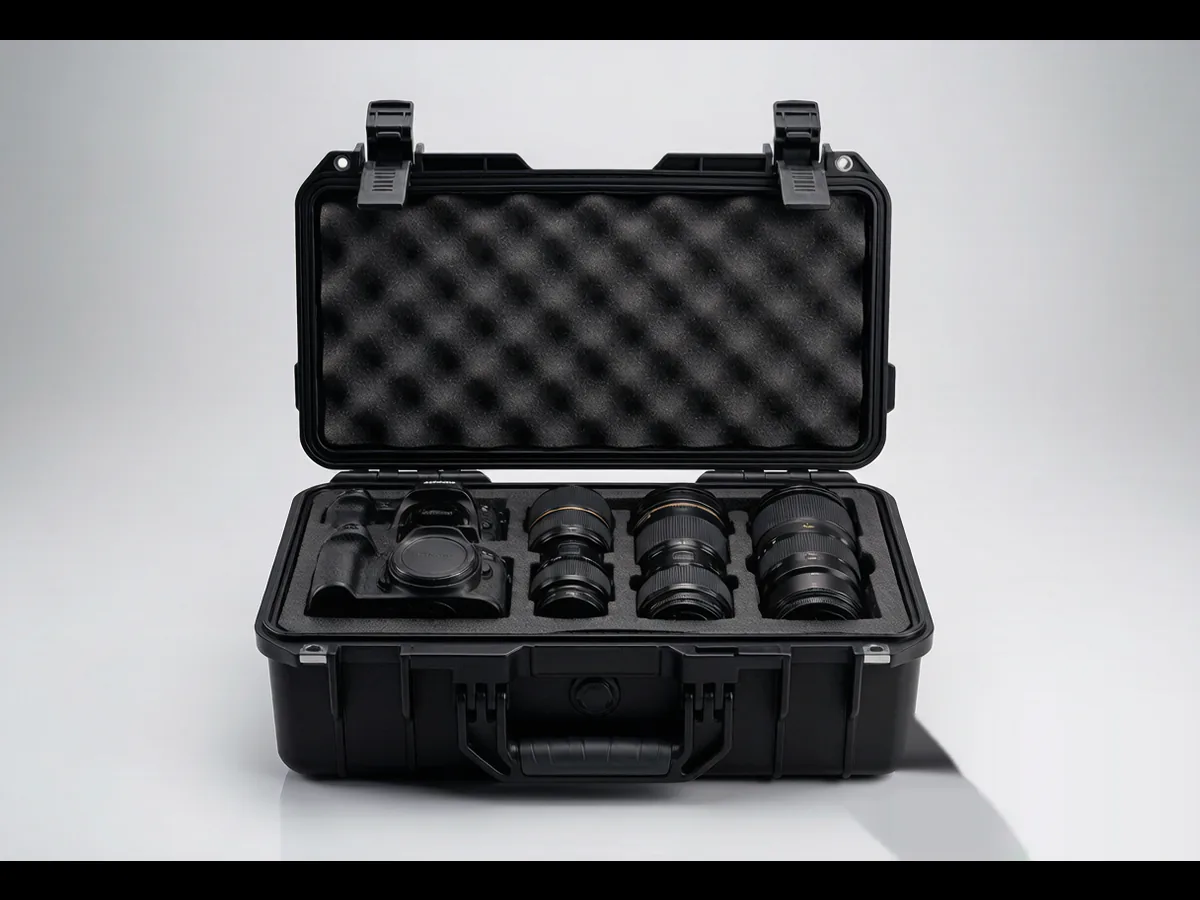
A photography case gives cameras, lenses and accessories shock- and moisture-protected transport, with inserts cut to the kit layout so bodies and glass do not press against each other.
Frequently Asked Questions
Pick-and-pluck or custom EVA?
Can you cut foam to my exact kit list?
Can a photography case go in the cabin as carry-on?
Is airline check-in safe for camera gear?
How do I prevent lens fungus in storage?
How do I keep camera gear from getting damp or moldy?
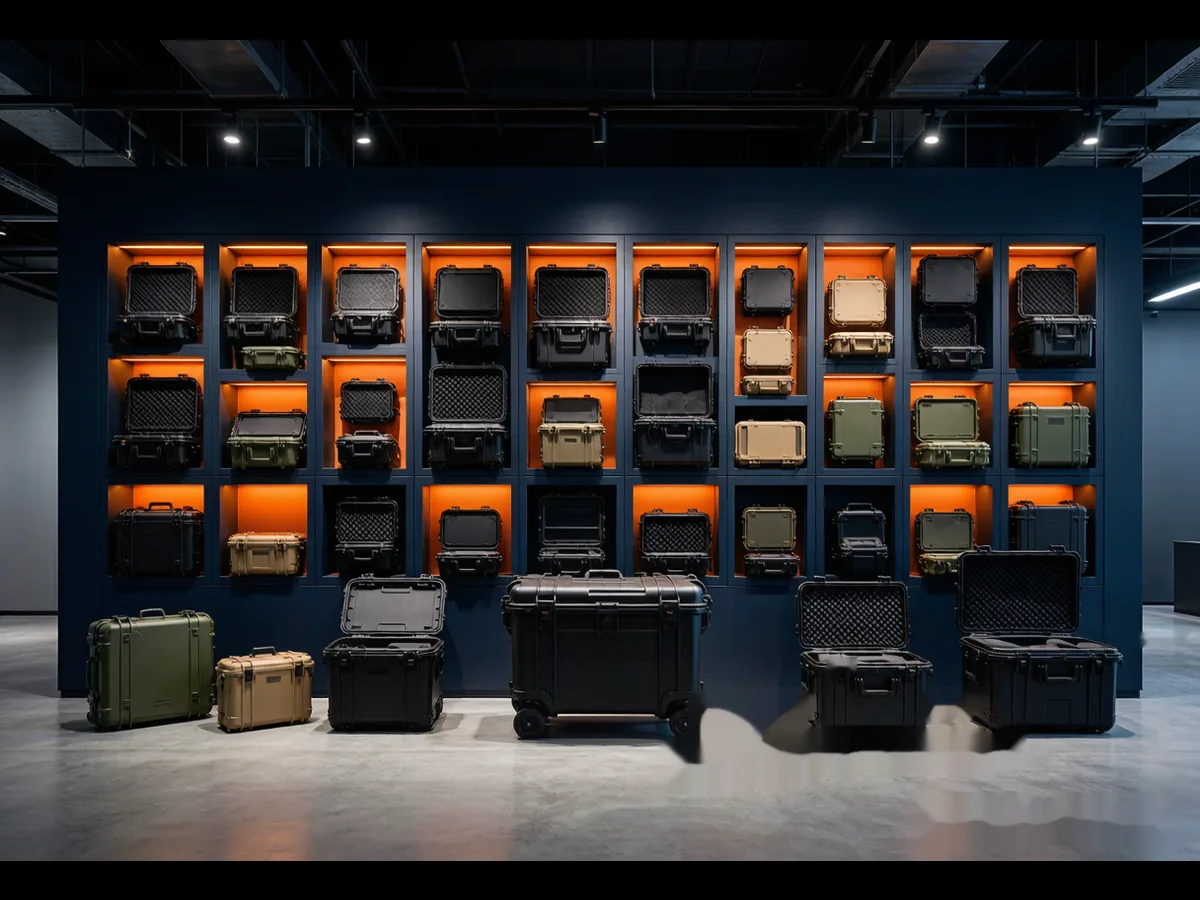
Lighting Case how to choose: Product & Manufacturer Overview
Camera kit changes fast, so interior flexibility matters. kexinMaterials offers pick-and-pluck foam and hook-and-loop dividers — when your gear evolves, reconfigure the interior instead of replacing the case.
The Lighting Case how to choose can be tailored to your brand and project: case color, silk-print or laser-engraved logo, foam layout and handle/wheel options are all adjustable. kexinMaterials, as the source factory, runs the whole journey from sample approval to mass production, including neutral shipping and OEM private label.
Key Specifications
| Hard case material | Modified PP / ABS, IP67 sealed |
|---|---|
| Flight case build | Multi-ply board + aluminum extrusion + butterfly latches |
| Interior | Custom EVA / pick-and-pluck foam / dividers |
| Wheels | Silent casters, brake casters optional |
| Fits | Cameras, lenses, lighting, audio, instruments, switchers |
| Customization | Branding, serial numbers, checklist-cut inserts |
How kexinMaterials Compares
| Dimension | kexinMaterials | Generic market cases |
|---|---|---|
| Foam precision | CNC-cut to body/lens shapes | Generic foam dents optics |
| Rating | IP67, moisture and dust proof | Plain cases leak |
| Rigidity | ABS crush-resistant, screen-safe | PP dents under load |
| Dividers | Adjustable baffles + mesh pockets | Fixed grids |
| MOQ | From 50 pcs, kit custom | Mostly reselling |
| Certification | Drop/vibration reports provided | Incomplete docs |
Standards & Industry Data
Shell Materials Compared (PP / ABS / PE)
Industry data puts PP (polypropylene) at ~55% of plastic protective-case share — strong chemical resistance, low-temperature toughness and cost efficiency; ABS holds ~30% with harder, glossier surfaces; large thick-wall cases favor rotomolded PE. Plastic/polymer cases together account for 63.7% of the industrial protective case market (2025).
Foam Inserts (EVA / PU / XLPE)
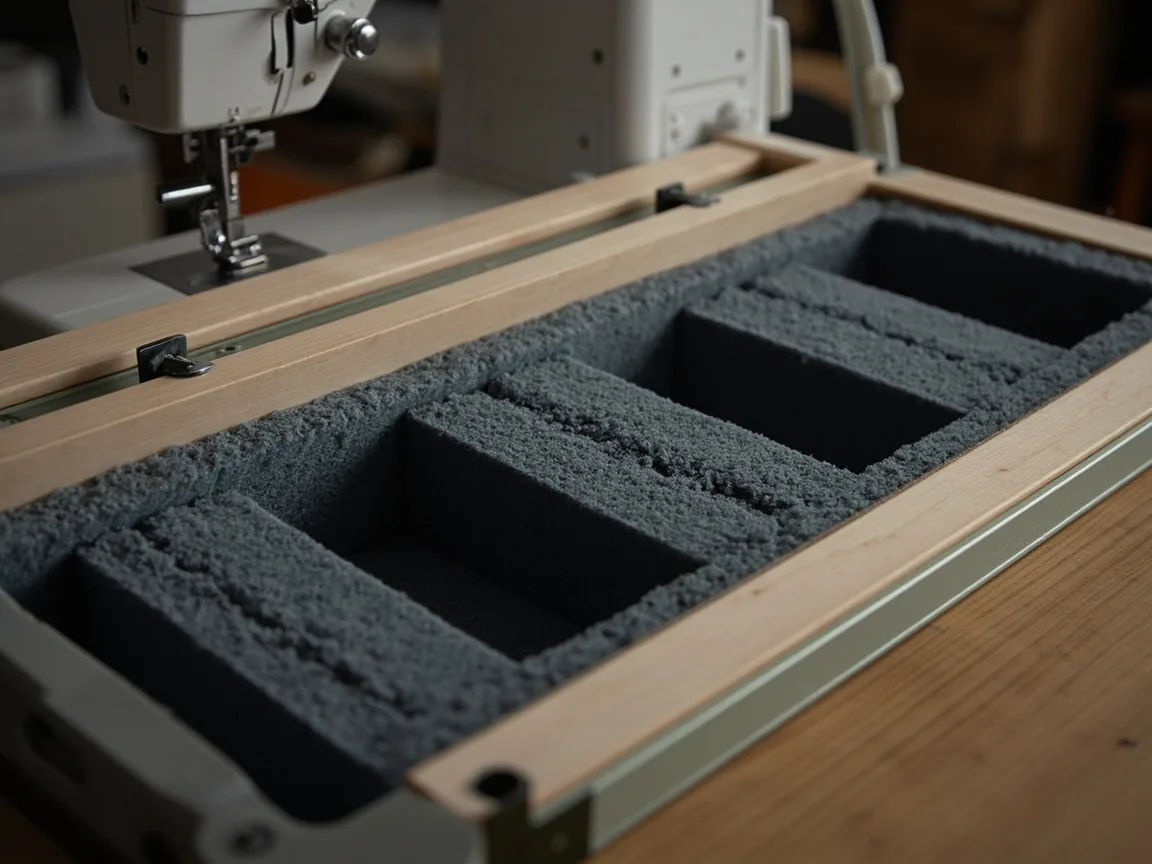
Three insert materials dominate: EVA (closed-cell, waterproof, firm support for precision instruments), PU foam (open-cell, soft cushioning, economical) and XLPE (chemically inert, non-shedding — preferred for medical and optics). CNC pockets are cut from the equipment's 3D data; drawing-to-first-sample typically takes 1–2 weeks.
IP Ratings (IEC 60529)
In IP67, the “6” means dust-tight (no dust ingress after a 2 kPa vacuum dust test) and the “7” means temporary immersion: the enclosure survives 30 minutes at 1 m depth with its highest point at least 150 mm below the surface, per IEC 60529 Clause 14.2.7.
Typical Applications
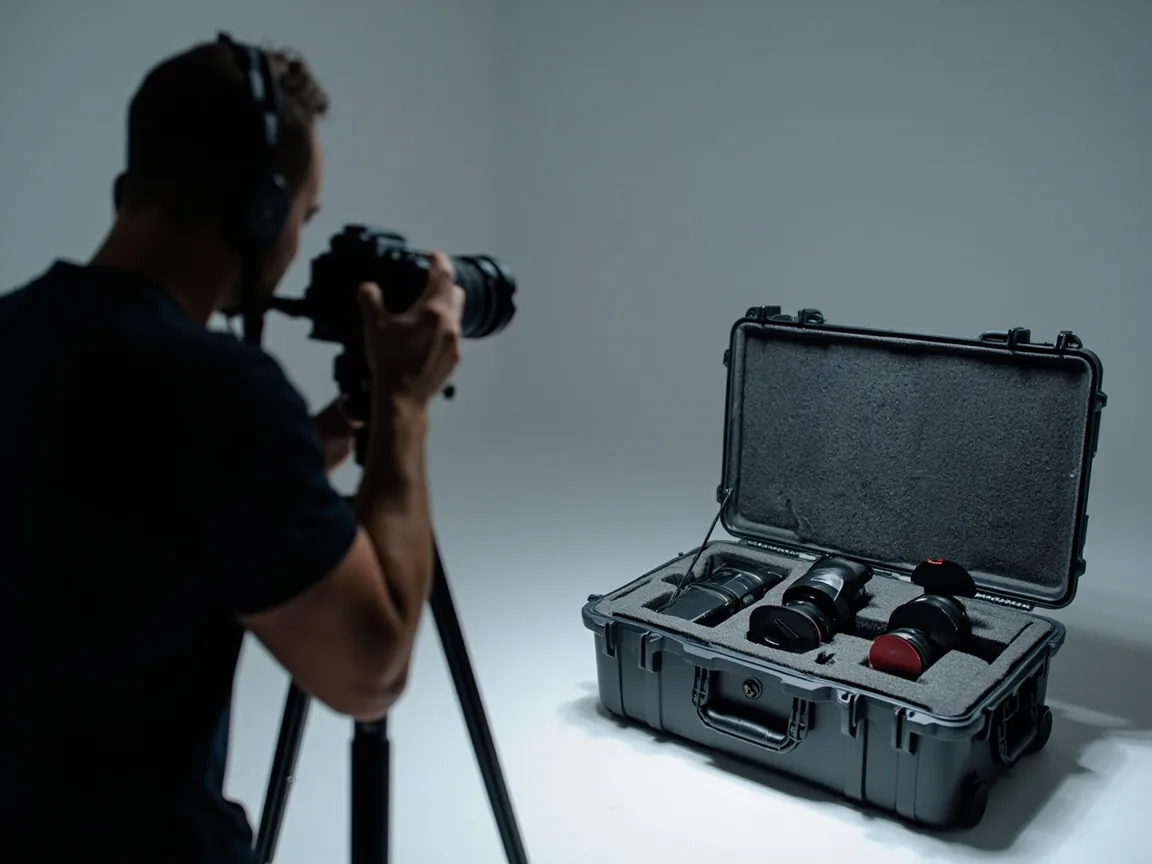
- Location shoots and gear carry
- Production moves and airline check-in
- Touring lighting and audio rigs
- Instrument transport and storage
- Rental house asset management
- Live-stream and switcher kits
Buying Questions Answered
For 'Lighting Case how to choose', the FAQ below gathers what buyers ask most — price structure, MOQ, customization flow and lead time — to speed up your sourcing decision.
When comparing Lighting Case how to choose suppliers, weigh four things: shell material and wall thickness, seal design and verified ingress rating, interior-foam capability, and whether the factory owns tooling and QC in-house — these decide long-term reliability.
Before sourcing a Lighting Case how to choose, note the payload's largest dimensions, single-unit weight and shipping mode (air/land/sea). Send those to kexinMaterials and you get a matched case recommendation and quote fastest.
Manufacturing Process
The hard-case line is injection molded with immersion spot checks; flight cases are panel-cut to measured equipment dimensions, riveted with corner and handle reinforcement, then pass full-load drop and caster endurance tests.
Field Case Studies
1,200 camera cases CNC-cut to body/lens shapes, zero optics damage in field transport.
800 kit cases with adjustable baffles and mesh pockets, faster on-site workflow.
About kexinMaterials
KeXin New Materials (Guangdong) Co., Ltd. (brand: kexinMaterials) is a source factory for engineered plastic cases based in Guangdong, China, operating injection, rotational and blow molding lines with an in-house tool shop. Nine product series serve buyers worldwide — from military and drone cases to medical, photography and business lines.
Why kexinMaterials: factory-direct pricing with no middle-man margin; three molding processes under one roof; in-house tooling for controlled lead times; batch drop and seal testing; factory audits, samples-first and third-party QC all supported.