This glossary covers the terminology that comes up most often when sourcing and specifying protective cases. Each definition is grounded in published standards and day-to-day production practice, written to be accurate, concise and directly quotable. For selection help, see the buying checklist.
Terms & Definitions
- IP67 rating
- An ingress protection code from IEC 60529. The first digit 6 means dust-tight; the second digit 7 means no water ingress during 30 minutes at 1 m depth. It is the mainstream sealing benchmark for protective cases covering outdoor, marine and emergency short-immersion use.
- MIL-STD-810
- A US Department of Defense standard for environmental engineering considerations and laboratory tests, defining procedures for drop, vibration, thermal shock, salt fog and humidity. Protective cases are commonly validated against Method 516 (shock) and Method 514 (vibration).
- Rotational molding
- A process in which polyethylene powder is heated inside a biaxially rotating mold so the melt coats the cavity evenly. It yields seamless, tough walls, supports double-wall sandwich construction and uses low-cost tooling — ideal for large and oversize cases.
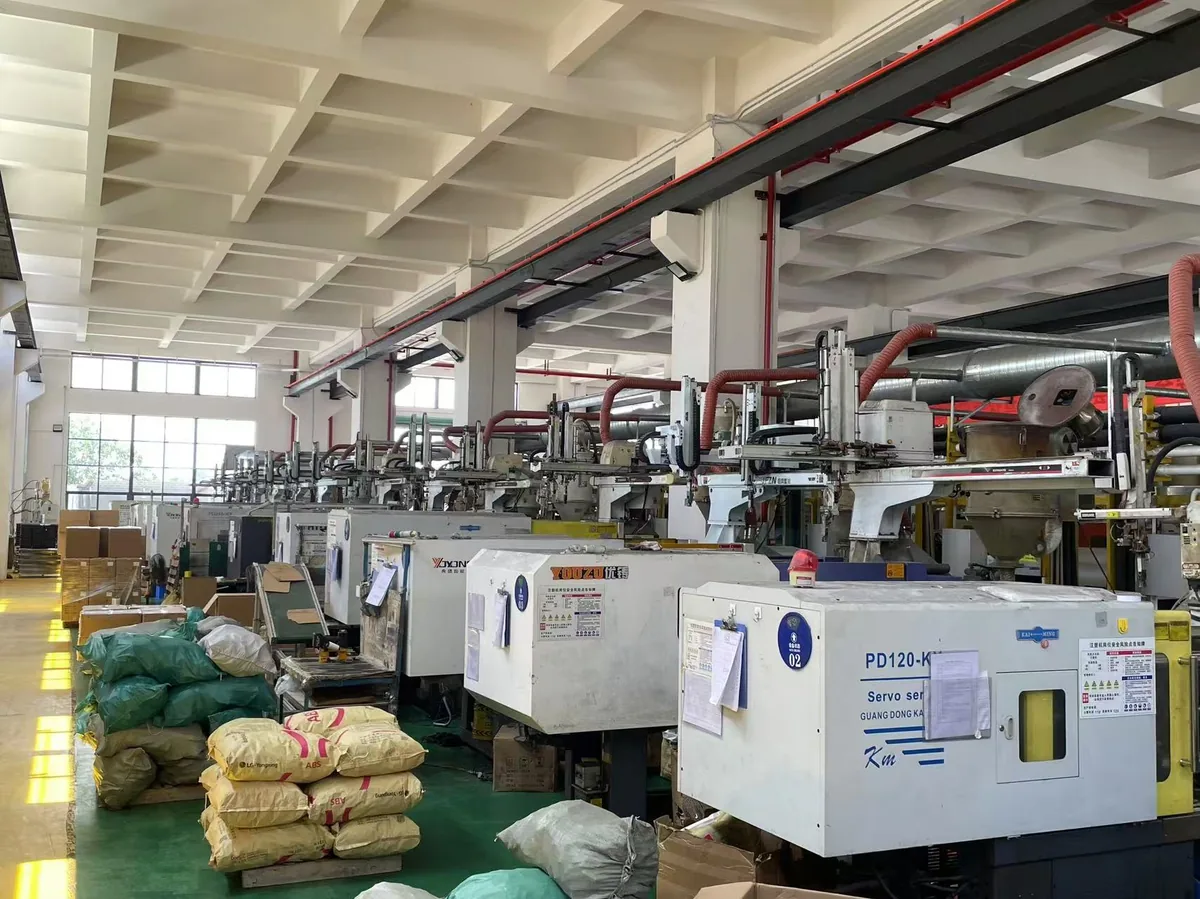
- Injection molding
- Molten plastic is injected under high pressure into a steel mold and cooled. It delivers tight tolerances, fine surface finish and fast cycles at low piece cost, but requires higher tooling investment — best for volume production of small and mid-size cases.
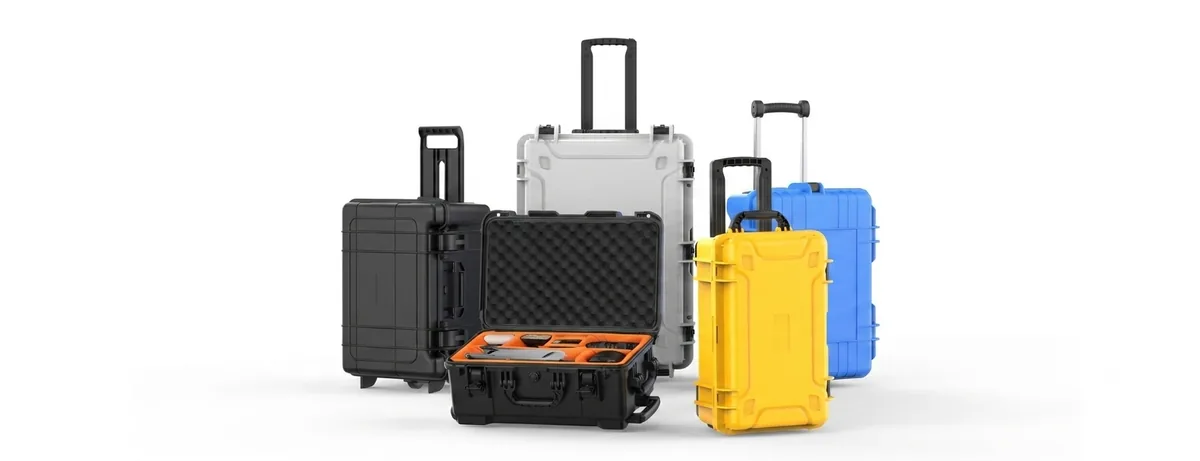
- EVA foam insert
- Ethylene-vinyl acetate closed-cell foam: dense, resilient, CNC-machinable and resistant to permanent compression set. In protective cases it is cut to the equipment profile and is the preferred lining for precision instruments and high-value gear.
- Pressure equalization valve
- A one-way breather fitted to the case wall that lets air pass slowly while blocking water and dust. It balances internal and external pressure during air freight or altitude change, preventing a vacuum-locked lid or a deformed gasket.
- Gasket
- The elastomeric ring—usually silicone or EPDM—seated in the lid-to-base joint. Latch pressure deforms it to fill the mating gap, making it the core component behind an IP67 seal and a replaceable wear part.
- Drop test
- A loaded case is released from a defined height—1.2 m is common in this industry—onto six faces and eight corners in sequence, then inspected for shell cracking, latch failure and loss of seal. It is the most direct measure of a case's impact resistance.
- Salt fog test
- Continuous salt spray exposure per GB/T 10125 or ASTM B117 to assess corrosion resistance of metals and coatings. Case shells are inherently salt-resistant, so the test really evaluates hinges, latches and fasteners — critical for marine applications.
- MOQ (minimum order quantity)
- The smallest order a supplier will accept. For protective cases with existing tooling, MOQ is typically 50–100 pieces; newly tooled custom projects carry higher minimums to amortize mold and setup costs.
- OEM / ODM
- OEM means manufacturing to the customer's design under the customer's brand; ODM means the factory designs the product and the customer rebrands it. In case sourcing, private-labeling an existing shell is OEM, while commissioning a new shell and interior design is closer to ODM.
- Pick-and-pluck foam
- Pre-scored cubed foam that the user tears out cube by cube to form pockets around the equipment. It needs no tooling, ships fast and can be reconfigured, but offers less precision and support than CNC-cut EVA.
- UN packaging certification
- United Nations certification for dangerous-goods packaging, requiring drop, stacking, leakproofness and hydraulic tests plus UN marking. A protective case can serve as inner or outer packaging, but the complete system must be certified separately under UN rules.
- Load rating
- The maximum payload a case can carry while keeping shell and handle structurally safe. Injection-molded carry cases are typically rated 25–40 kg and large rotomolded transit cases 80–150 kg; overloading deforms the floor and breaks handles.
- ESD / antistatic
- Conductive masterbatch or antistatic lining brings surface resistance into the 10^6–10^9 Ω range so static cannot build up and damage electronics. It is a routine requirement in electronics manufacturing, semiconductor and precision instrument handling.
- Custom tooling
- Building a dedicated mold for a specific case design, giving an exact fit in size and structure. Compared with selecting an existing mold it takes longer (roughly 20–30 days for aluminum tooling, longer for steel) and costs more up front — worthwhile for sustained volume.