Large Hard Shell Case: confirm internal dimensions first (equipment size plus foam allowance), then protection rating (IP67 is the benchmark) and shell material (PP for value, ABS for surface hardness, rotomolded PE for large sizes). Custom sizes available via tooling.
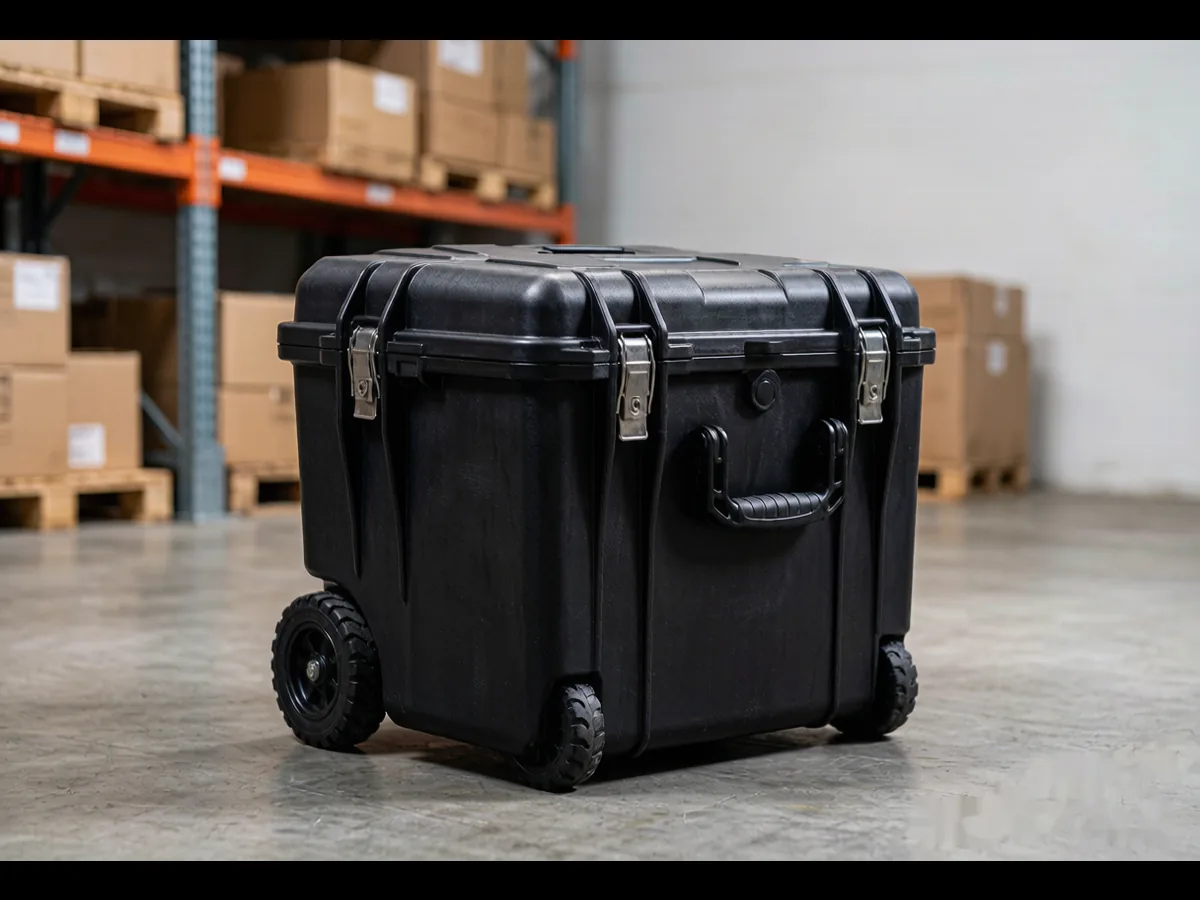
A rotomolded case is produced by rotational molding with seamless walls and high toughness, built for heavy-duty transport of large equipment, spares and hazmat with strong impact and stacking resistance.
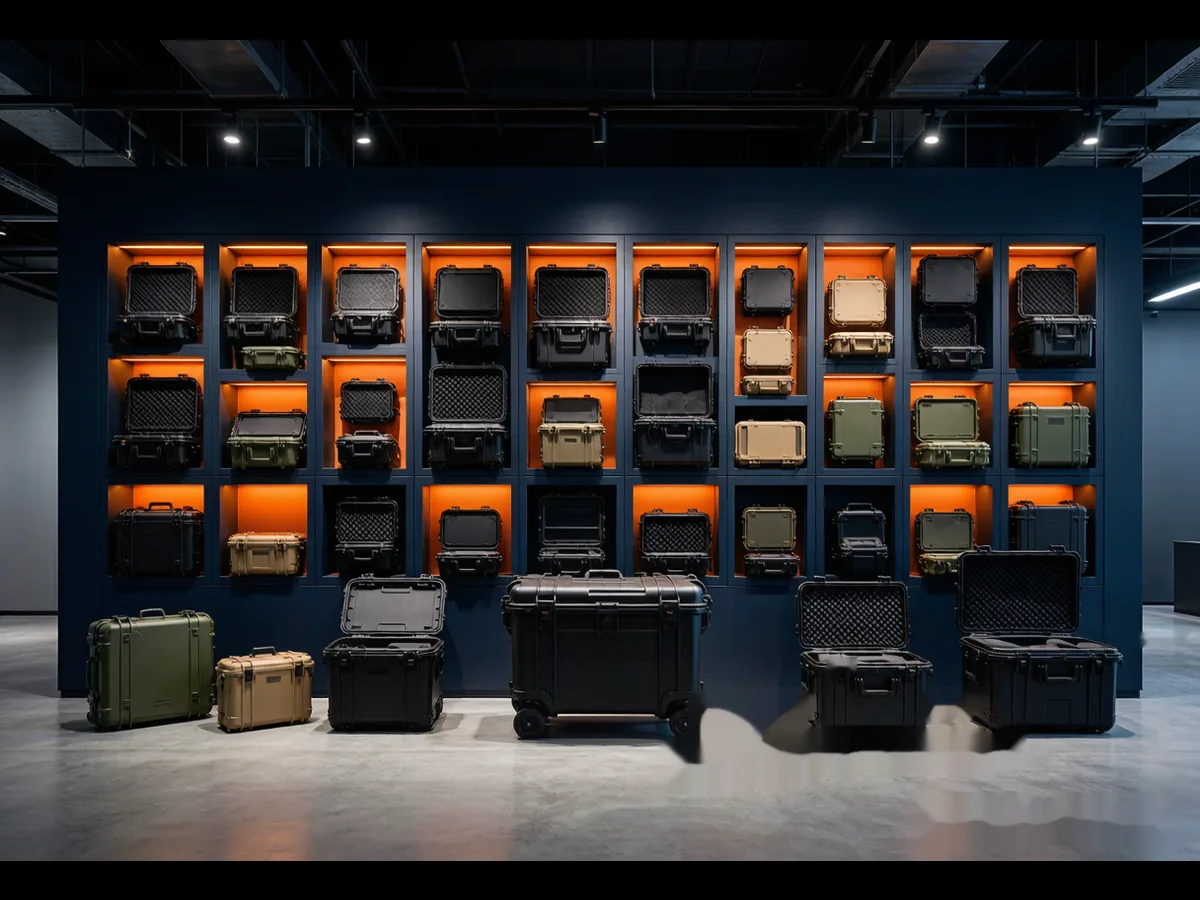
Large Hard Shell Case: Product & Manufacturer Overview
Material sets the floor of case performance. kexinMaterials works with modified PP, rotational-grade LLDPE and glass-fiber-reinforced compounds, tuning UV, flame-retardant, anti-static and cold-impact properties to the service environment of your Large Hard Shell Case, with test reports supplied.
The Large Hard Shell Case can be tailored to your brand and project: case color, silk-print or laser-engraved logo, foam layout and handle/wheel options are all adjustable. kexinMaterials, as the source factory, runs the whole journey from sample approval to mass production, including neutral shipping and OEM private label.
Key Specifications
| Injection molding | High precision and finish for sealed mid/small cases |
|---|---|
| Rotational molding | Seamless, ultra-tough, for large transit cases |
| Blow molding | Lightweight, low cost, for tool boxes and packaging |
| Materials | Modified PP / ABS / LLDPE / glass-fiber reinforced |
| Tooling | In-house shop, steel and aluminum molds |
| Max part size | 3-meter class via rotomolding |
How kexinMaterials Compares
| Dimension | kexinMaterials | Generic market cases |
|---|---|---|
| Wall uniformity | 5–10 mm seamless rotomold, thicker corners | Injection has weld lines, uneven walls |
| Impact | Monolithic toughness, resists cracking | Thin parts snap |
| Tooling cost | ≈1/5–1/10 of injection, great for large cases | Injection molds costly |
| Size range | Large thick-wall (>1 m) is the sweet spot | Large injection cases pricey |
| MOQ | Friendly for small–mid batches | Economical only at volume |
| Use | Airdrop/transit/marine heavy-load roles | Light-load focus otherwise |
Large-format note: cases over 800 mm per side are best rotomolded — seamless walls, high tear resistance — and should add wheels, forklift channels and multi-person handles.
Standards & Industry Data
Rotomolding Parameters (LLDPE)
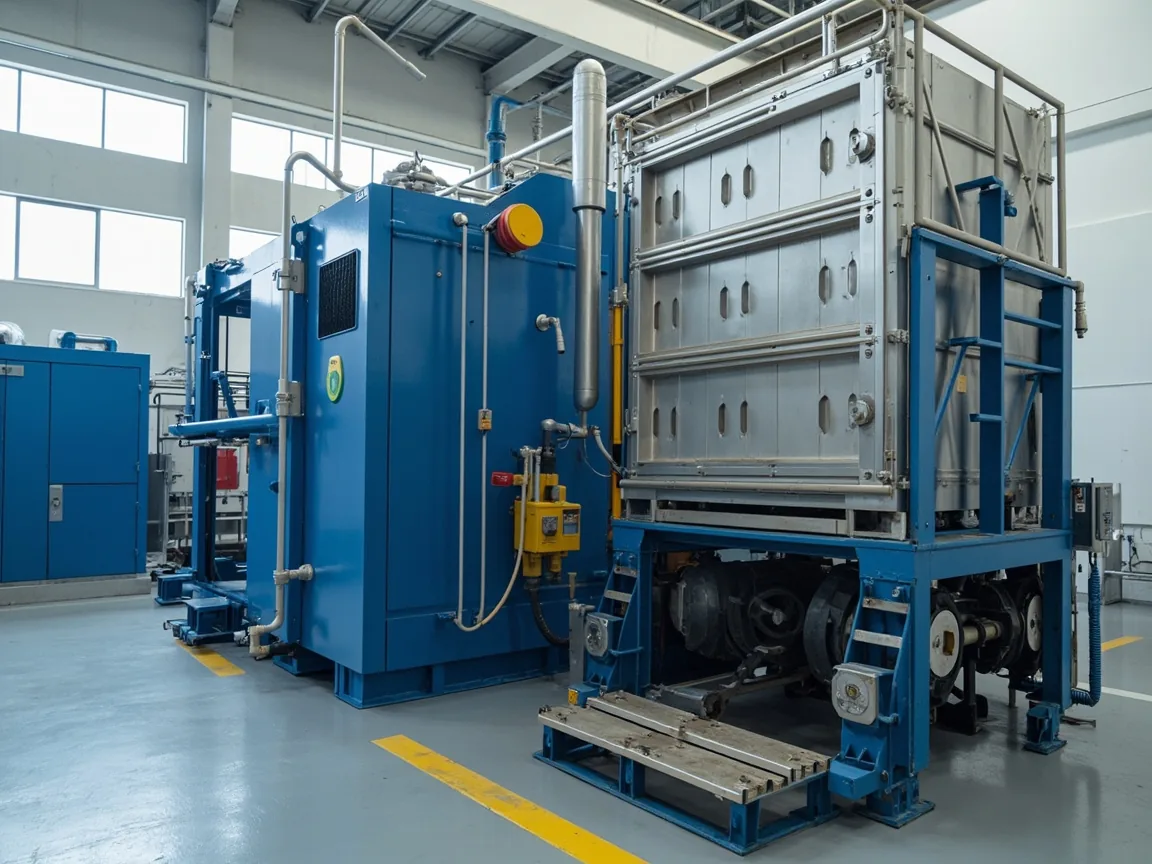
Rotomolded cases use LLDPE powder with typical wall thickness of 5–10 mm (process range 1–16 mm), naturally thicker corners, and no weld seams or trim waste. Tooling costs roughly 1/5–1/10 of injection molds with ~±5% dimensional tolerance — ideal for large, thick-wall cases in small-to-mid batches.
Market Size & Growth
The global industrial protective case market was worth about USD 2.05 billion in 2025 and is projected to reach USD 2.88 billion by 2032 (5.0% CAGR). Military & defense is the largest application (~30%), drone-related cases are the fastest-growing niche, North America is the largest region and APAC grows fastest.
Shell Materials Compared (PP / ABS / PE)
Industry data puts PP (polypropylene) at ~55% of plastic protective-case share — strong chemical resistance, low-temperature toughness and cost efficiency; ABS holds ~30% with harder, glossier surfaces; large thick-wall cases favor rotomolded PE. Plastic/polymer cases together account for 63.7% of the industrial protective case market (2025).
Typical Applications
- Custom rotomolded transit cases for heavy equipment
- High-seal injection molded instrument cases
- Blow-molded tool box contract manufacturing
- Specialty compound case development
- Full ODM outsourcing for case brands
- Export-spec case re-engineering
Sizing & Selection Guide
To size a Large Hard Shell Case, measure the largest 3D dimensions of the payload and allow 30–50 mm per side for foam, then match against internal case dimensions. Above 30 kg payloads, add wheels and reinforced bases.
kexinMaterials stocks a full size run from personal cases to large transit trunks with published internal dimensions; if nothing fits, we evaluate mold revisions or new tooling — selection advice is free.
Manufacturing Process
The injection line owns precision and sealing, the rotomolding line owns size and toughness, and the blow molding line owns weight and cost — all sharing one tool shop and QC system, so one supplier covers a multi-process purchasing mix.
Field Case Studies
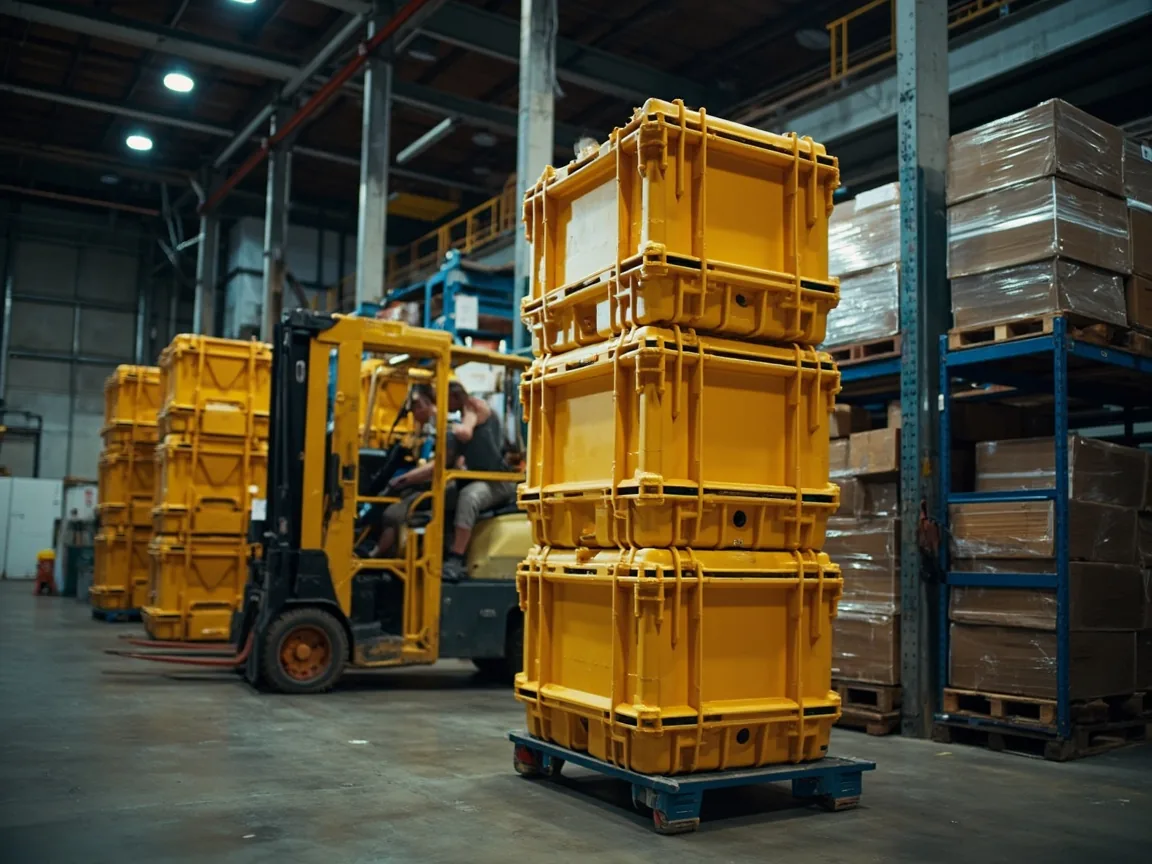
400 large airdrop transit cases, seamless rotomolded 8 mm walls, intact through repeated landing drops.
1,100 thick-wall shipboard cases, salt-fog and impact resistant, no cracking after two years at sea.
About kexinMaterials
KeXin New Materials (Guangdong) Co., Ltd. (brand: kexinMaterials) is a source factory for engineered plastic cases based in Guangdong, China, operating injection, rotational and blow molding lines with an in-house tool shop. Nine product series serve buyers worldwide — from military and drone cases to medical, photography and business lines.
Why kexinMaterials: factory-direct pricing with no middle-man margin; three molding processes under one roof; in-house tooling for controlled lead times; batch drop and seal testing; factory audits, samples-first and third-party QC all supported.