Explosion-proof Camera Equipment Case is an engineered protective case in the camera case family: built by source factory kexinMaterials with IP67 sealing, impact-resistant PP copolymer or rotomolded PE shells and CNC-cut custom foam; wholesale, OEM and export supported.
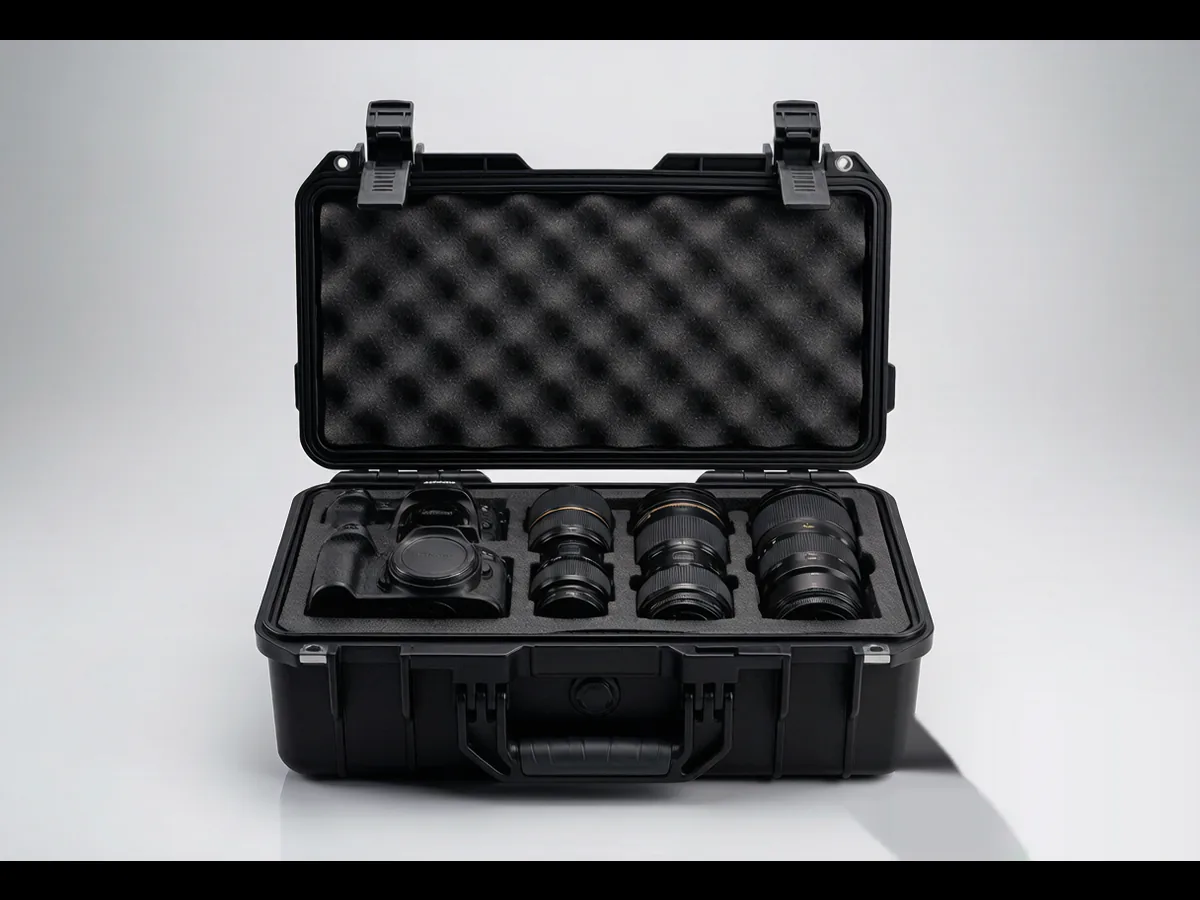
A photography case gives cameras, lenses and accessories shock- and moisture-protected transport, with inserts cut to the kit layout so bodies and glass do not press against each other.
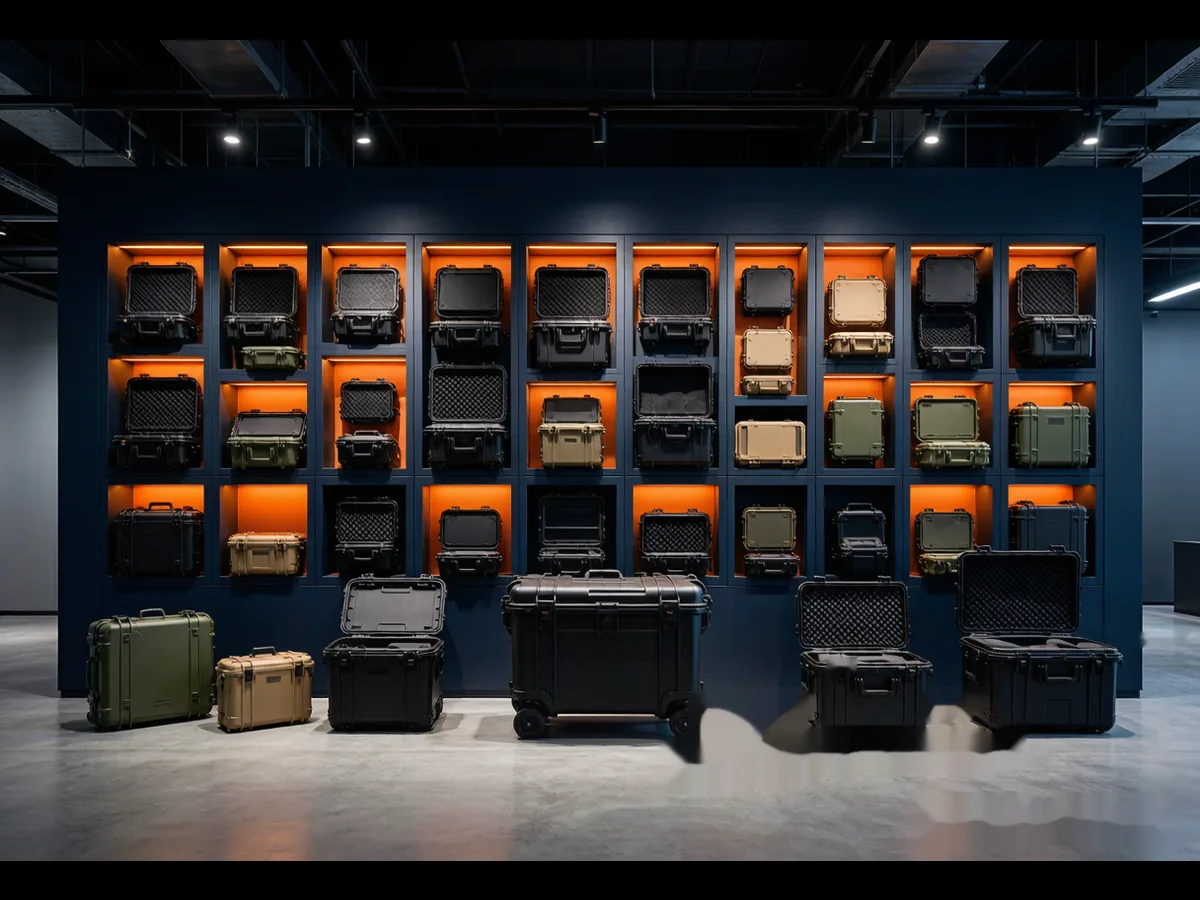
Explosion-proof Camera Equipment Case: Product & Manufacturer Overview
The Explosion-proof Camera Equipment Case can be tailored to your brand and project: case color, silk-print or laser-engraved logo, foam layout and handle/wheel options are all adjustable. kexinMaterials, as the source factory, runs the whole journey from sample approval to mass production, including neutral shipping and OEM private label.
For buyers, the true cost of a Explosion-proof Camera Equipment Case is more than unit price: carton specs shape freight, and spare parts and replenishment shape long-term use. kexinMaterials optimizes container loading and ships wear-part kits with volume orders to lower your total cost of ownership.
Key Specifications
| Hard case material | Modified PP / ABS, IP67 sealed |
|---|---|
| Flight case build | Multi-ply board + aluminum extrusion + butterfly latches |
| Interior | Custom EVA / pick-and-pluck foam / dividers |
| Wheels | Silent casters, brake casters optional |
| Fits | Cameras, lenses, lighting, audio, instruments, switchers |
| Customization | Branding, serial numbers, checklist-cut inserts |
How kexinMaterials Compares
| Dimension | kexinMaterials | Generic market cases |
|---|---|---|
| Foam precision | CNC-cut to body/lens shapes | Generic foam dents optics |
| Rating | IP67, moisture and dust proof | Plain cases leak |
| Rigidity | ABS crush-resistant, screen-safe | PP dents under load |
| Dividers | Adjustable baffles + mesh pockets | Fixed grids |
| MOQ | From 50 pcs, kit custom | Mostly reselling |
| Certification | Drop/vibration reports provided | Incomplete docs |
Safety design: flame-retardant compounds, isolated compartments and engineered vent paths reduce cascade risk in hazardous duty, meeting protective transport requirements for sensitive items.
Standards & Industry Data
Market Size & Growth
The global industrial protective case market was worth about USD 2.05 billion in 2025 and is projected to reach USD 2.88 billion by 2032 (5.0% CAGR). Military & defense is the largest application (~30%), drone-related cases are the fastest-growing niche, North America is the largest region and APAC grows fastest.
Foam Inserts (EVA / PU / XLPE)
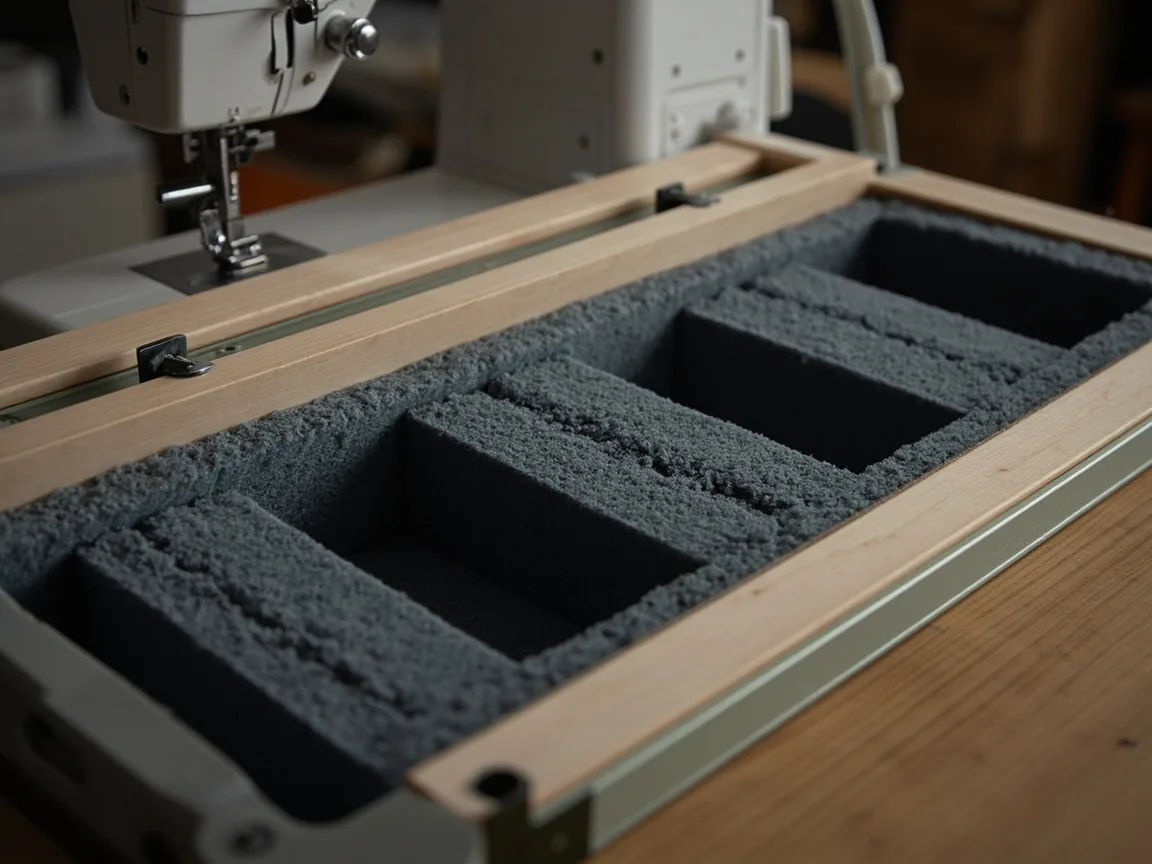
Three insert materials dominate: EVA (closed-cell, waterproof, firm support for precision instruments), PU foam (open-cell, soft cushioning, economical) and XLPE (chemically inert, non-shedding — preferred for medical and optics). CNC pockets are cut from the equipment's 3D data; drawing-to-first-sample typically takes 1–2 weeks.
Shell Materials Compared (PP / ABS / PE)
Industry data puts PP (polypropylene) at ~55% of plastic protective-case share — strong chemical resistance, low-temperature toughness and cost efficiency; ABS holds ~30% with harder, glossier surfaces; large thick-wall cases favor rotomolded PE. Plastic/polymer cases together account for 63.7% of the industrial protective case market (2025).
Typical Applications
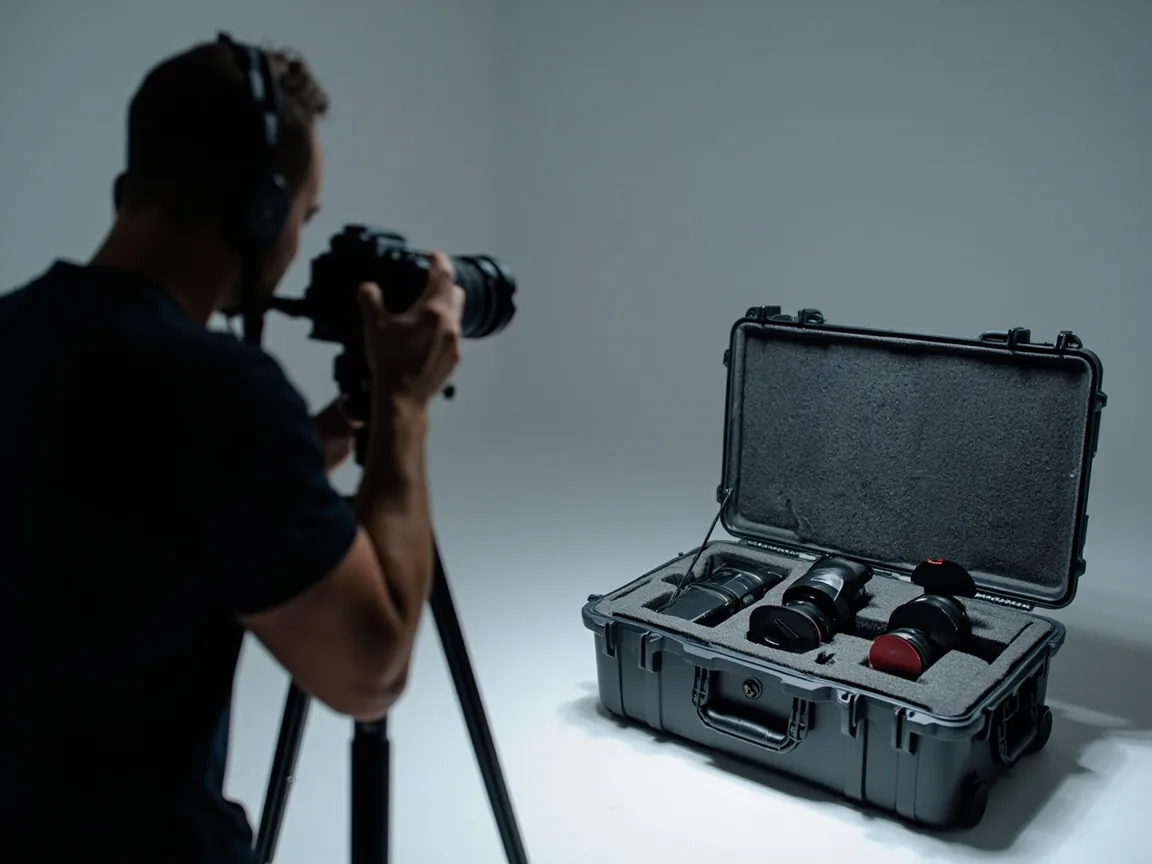
- Location shoots and gear carry
- Production moves and airline check-in
- Touring lighting and audio rigs
- Instrument transport and storage
- Rental house asset management
- Live-stream and switcher kits
Product Overview
The kexinMaterials Explosion-proof Camera Equipment Case is one-piece molded from engineering plastics, balancing impact strength, sealing and long-term durability — available from stock or fully customized. Key specs below.
On process: the Explosion-proof Camera Equipment Case can be injection, rotational or blow molded. Injection gives precise sealing and repeatability; rotomolding yields large seamless shells with thick-wall toughness; blow molding suits light, economical builds. kexinMaterials runs all three lines and matches the process to your protection grade and budget.
For interior protection, the Explosion-proof Camera Equipment Case ships with or accepts CNC-cut EVA/PE foam, routed to your equipment's 3D data so nothing shifts in transit; precision instruments can add ESD-safe or cushioned layered structures.
On quality, the Explosion-proof Camera Equipment Case passes batch drop, stack and immersion checks; key models can be tested to MIL-STD-810H for drop and vibration, with material and third-party test reports supplied for export and industry acceptance.
Manufacturing Process
The hard-case line is injection molded with immersion spot checks; flight cases are panel-cut to measured equipment dimensions, riveted with corner and handle reinforcement, then pass full-load drop and caster endurance tests.
Field Case Studies
1,200 camera cases CNC-cut to body/lens shapes, zero optics damage in field transport.
800 kit cases with adjustable baffles and mesh pockets, faster on-site workflow.
About kexinMaterials
KeXin New Materials (Guangdong) Co., Ltd. (brand: kexinMaterials) is a source factory for engineered plastic cases based in Guangdong, China, operating injection, rotational and blow molding lines with an in-house tool shop. Nine product series serve buyers worldwide — from military and drone cases to medical, photography and business lines.
Why kexinMaterials: factory-direct pricing with no middle-man margin; three molding processes under one roof; in-house tooling for controlled lead times; batch drop and seal testing; factory audits, samples-first and third-party QC all supported.