Biosafety Transport Case manufacturing process — short answer: judge three things: ingress protection (IP67 = 1 m for 30 min), impact structure (26-drop military testing) and foam fit (EVA/PU/XLPE by payload). Details below, standard by standard.
A medical equipment case carries first-aid, diagnostic and sampling devices with hygienic, easy-clean materials and custom dividers for fast pre-hospital and field response.
Frequently Asked Questions
Can you build cold-chain or insulated versions?
Are you a factory or a trading company?
Can medical cases be wiped with disinfectant?
Can it be made lighter for single-person carry?
Can the interior be zoned by clinical function?
Can first-aid interiors be configured per department?
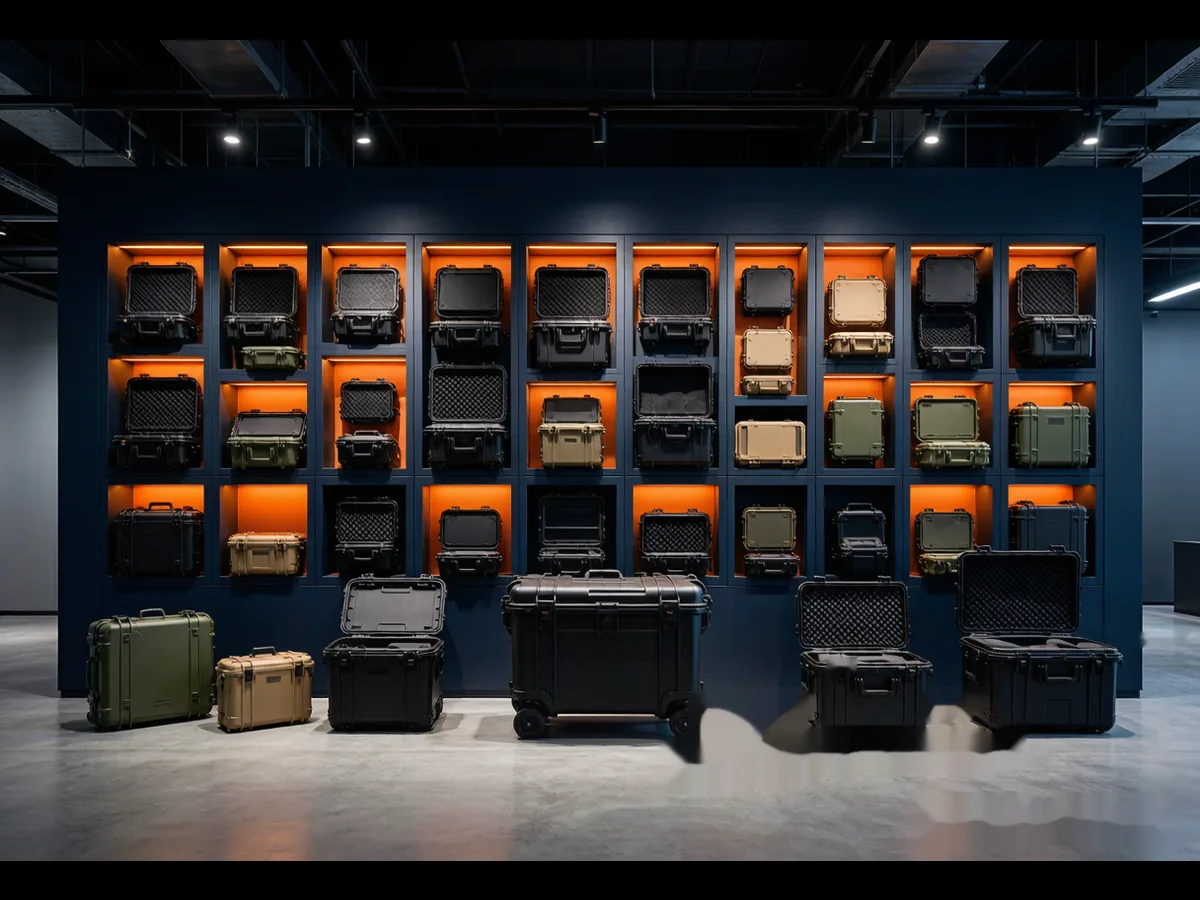
Biosafety Transport Case manufacturing process: Product & Manufacturer Overview
Reliability in a Biosafety Transport Case manufacturing process comes from structure: kexinMaterials combines PU-foamed insulation walls with sealed shells and dedicated ice-pack bays, holding 2–8°C for 48+ hours under standard load (model and ambient dependent), with mounting points for temperature data loggers.
For device manufacturers and pharma distributors, kexinMaterials offers OEM programs on the Biosafety Transport Case manufacturing process: custom inserts sized to your device, insulation test data for cold-chain validation, and logger accessories for GDP/GSP compliance — one supplier from registration to operations.
Key Specifications
| Shell material | Modified PP / PE with PU foam insulation |
|---|---|
| Temperature hold | 2–8°C / 15–25°C with ice packs (validated per model) |
| Protection rating | IP67 |
| Liner | Food-grade EVA / medical PE, disinfectable |
| Monitoring | Logger bay, humidity indicator options |
| Compliance | GDP/GSP cold-chain validation support |
How kexinMaterials Compares
| Dimension | kexinMaterials | Generic market cases |
|---|---|---|
| Clean liner | XLPE cross-linked foam, non-shedding, disinfectable | Generic foam sheds onto instruments |
| Temperature | Optional insulation + ice-pack bay, 2–8°C short hold | No control, cold chain breaks |
| Rating | IP67, blocks liquid ingress | Plain cases not waterproof |
| Labeling | Biohazard/sharps silkscreen supported | No professional marking |
| MOQ | From 50 pcs, infection-control custom | Mostly off-the-shelf |
| Certification | Material & REACH docs provided | Incomplete compliance |
Standards & Industry Data
Foam Inserts (EVA / PU / XLPE)
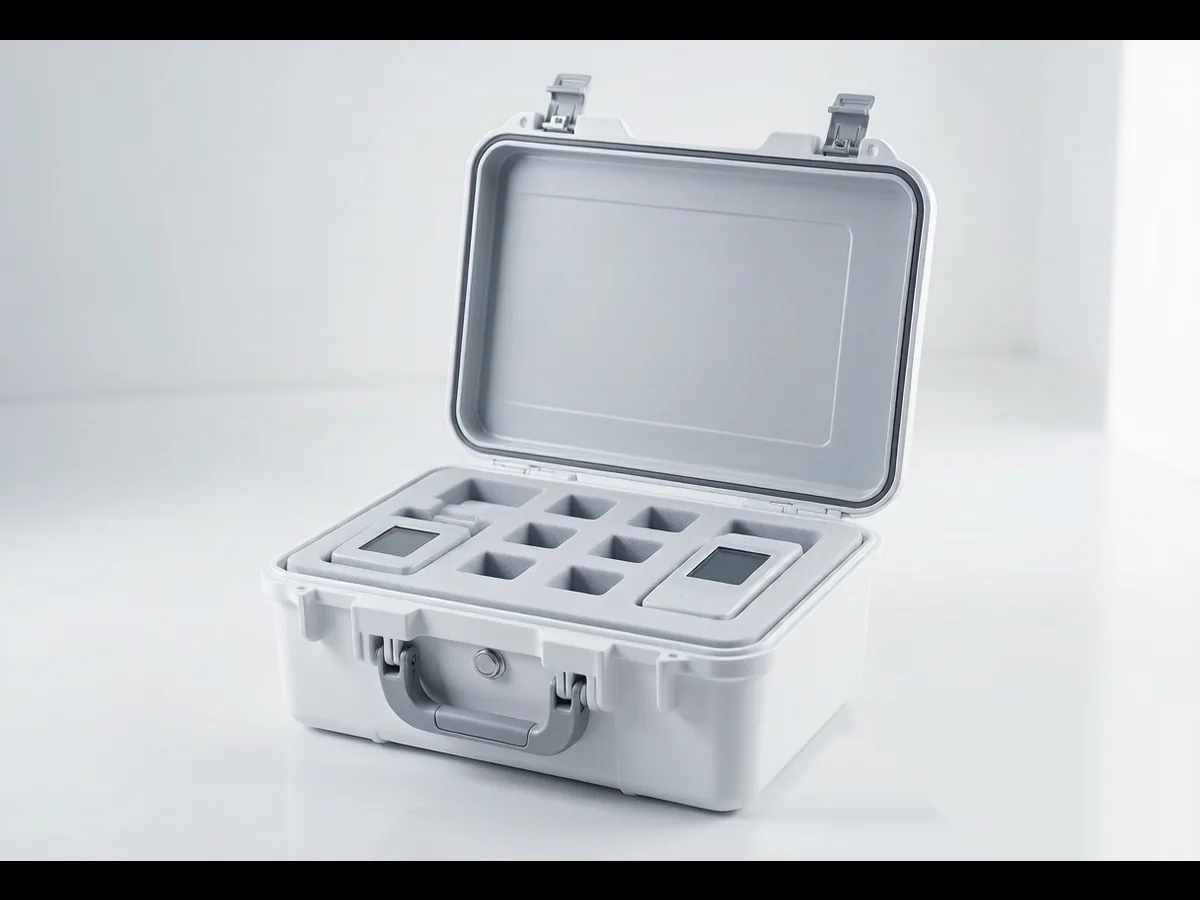
Three insert materials dominate: EVA (closed-cell, waterproof, firm support for precision instruments), PU foam (open-cell, soft cushioning, economical) and XLPE (chemically inert, non-shedding — preferred for medical and optics). CNC pockets are cut from the equipment's 3D data; drawing-to-first-sample typically takes 1–2 weeks.
IP Ratings (IEC 60529)
In IP67, the “6” means dust-tight (no dust ingress after a 2 kPa vacuum dust test) and the “7” means temporary immersion: the enclosure survives 30 minutes at 1 m depth with its highest point at least 150 mm below the surface, per IEC 60529 Clause 14.2.7.
Shell Materials Compared (PP / ABS / PE)
Industry data puts PP (polypropylene) at ~55% of plastic protective-case share — strong chemical resistance, low-temperature toughness and cost efficiency; ABS holds ~30% with harder, glossier surfaces; large thick-wall cases favor rotomolded PE. Plastic/polymer cases together account for 63.7% of the industrial protective case market (2025).
Typical Applications
- Vaccine and biologics cold-chain delivery
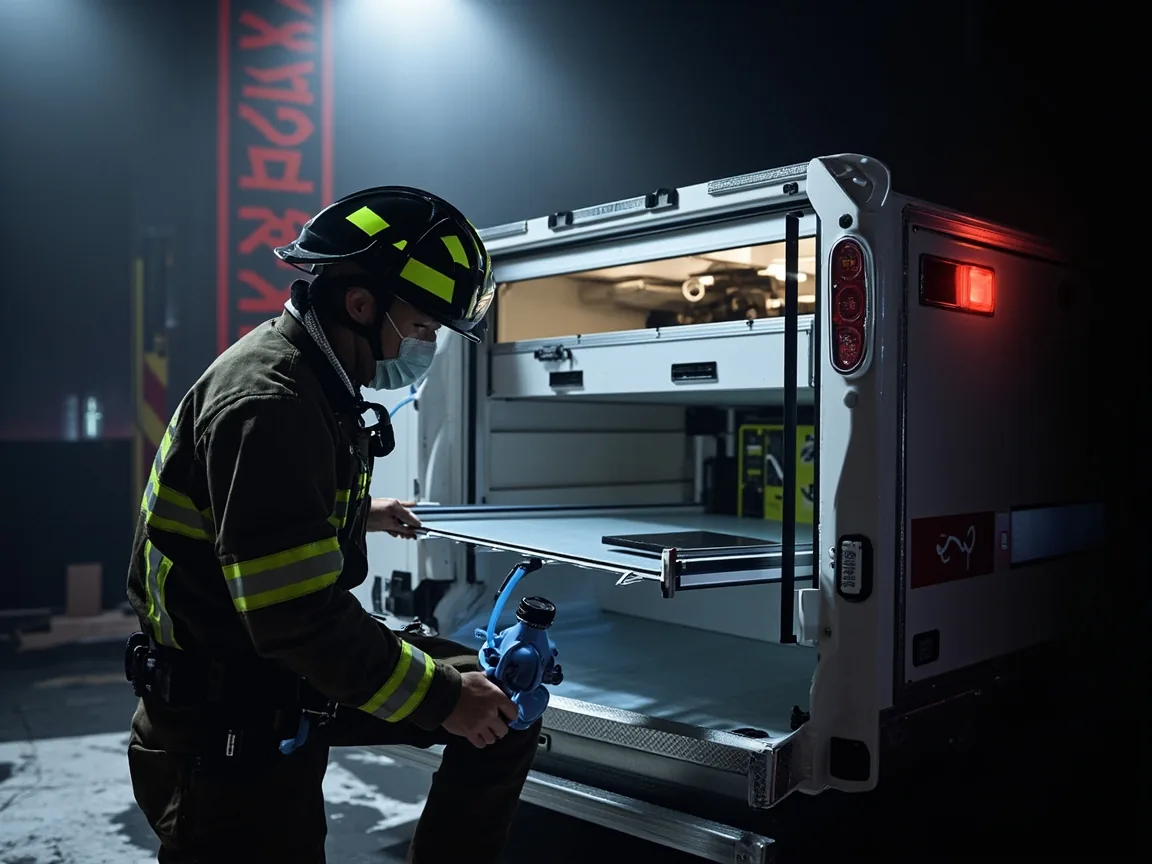
- Ambulance and pre-hospital emergency kits
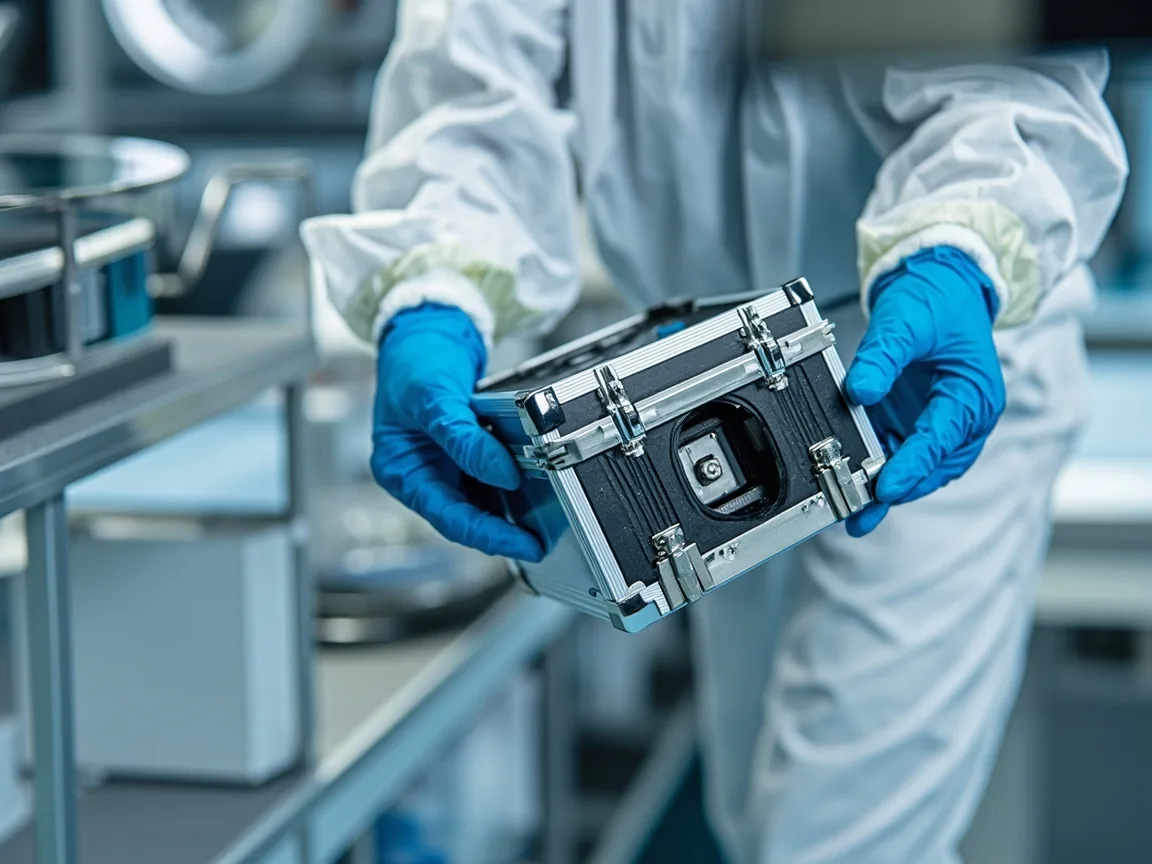
- Inter-lab biological specimen transfer
- Clinical trial material logistics
- Disaster medical relief pre-positioning
- Corporate and household first-aid storage
Buying Questions Answered
For 'Biosafety Transport Case manufacturing process', the FAQ below gathers what buyers ask most — price structure, MOQ, customization flow and lead time — to speed up your sourcing decision.
When comparing Biosafety Transport Case manufacturing process suppliers, weigh four things: shell material and wall thickness, seal design and verified ingress rating, interior-foam capability, and whether the factory owns tooling and QC in-house — these decide long-term reliability.
Before sourcing a Biosafety Transport Case manufacturing process, note the payload's largest dimensions, single-unit weight and shipping mode (air/land/sea). Send those to kexinMaterials and you get a matched case recommendation and quote fastest.
Manufacturing Process
Cold-chain bodies are double-walled and PU-foamed in one operation for gap-free insulation; first-aid cases are lightweight injection molded with modular interiors. Cold models ship with measured temperature-hold curves for your validation files.
Field Case Studies
1,500 vaccine cold-chain cases with XLPE liner and ice-pack bay holding 2–8°C short-term; passed infection-control acceptance.
2,200 surgical-instrument transit cases with biohazard silkscreen and full REACH documentation.
About kexinMaterials
KeXin New Materials (Guangdong) Co., Ltd. (brand: kexinMaterials) is a source factory for engineered plastic cases based in Guangdong, China, operating injection, rotational and blow molding lines with an in-house tool shop. Nine product series serve buyers worldwide — from military and drone cases to medical, photography and business lines.
Why kexinMaterials: factory-direct pricing with no middle-man margin; three molding processes under one roof; in-house tooling for controlled lead times; batch drop and seal testing; factory audits, samples-first and third-party QC all supported.