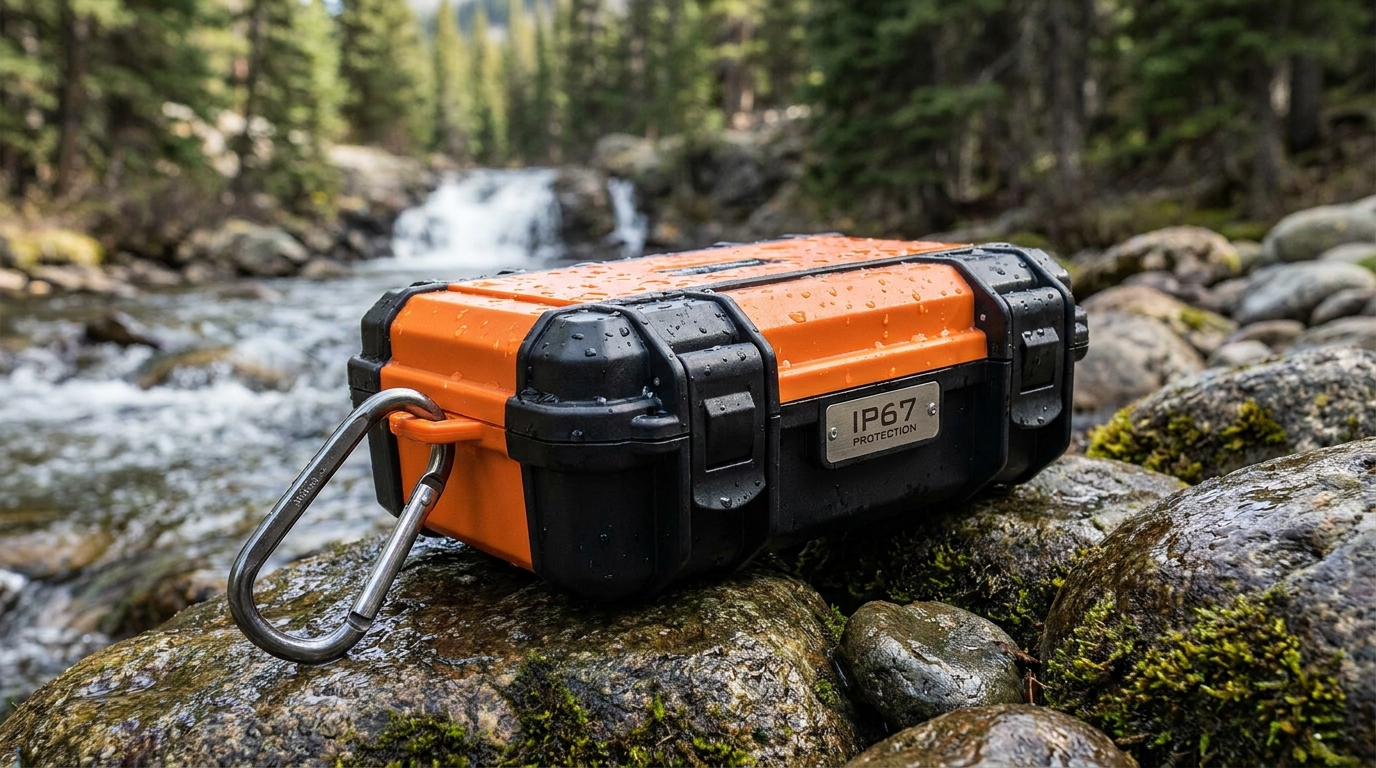
Marine environment causes: galvanic corrosion (dissimilar metals), crevice corrosion (sealed joints), pitting corrosion (chloride attack), and erosion corrosion (flow + particle impact). Standard cases fail in 6-12 months due to: (1) steel hardware rust, (2) aluminum pitting, (3) rubber EPDM seal hardening, (4) ABS plastic UV degradation, (5) foam water absorption. KeXinMaterials marine cases use: 316 stainless steel, polypropylene shell, silicone seals, closed-cell foam, UV stabilizers.
Offshore operations require: ATEX/IECEx for explosive atmospheres (Zone 1/2), SOLAS for life-saving equipment, IMO for marine equipment, ISPS for port security, flag state specific requirements (USCG, MCA, AMSA). KeXinMaterials offers ATEX-certified cases for Zone 1 explosive atmospheres and SOLAS-compliant emergency equipment cases.
Industry Overview: Marine & Offshore
The marine and offshore industry includes commercial shipping, offshore oil & gas, naval defense, fishing, marine research, and offshore wind. The industry operates in some of the harshest environments on Earth: salt water, salt fog, high humidity, UV radiation, temperature extremes, and constant vibration. Equipment failure at sea can cost $50,000-500,000 per day, making reliable protective packaging mission-critical.
Common Equipment & Packaging Requirements
Marine and offshore operations transport and use a wide range of equipment, including:
- Navigation electronics - GPS, radar, sonar, ECDIS, gyrocompasses, AIS
- Communication systems - VHF, HF, satellite communications, GMDSS
- Safety equipment - EPIRBs, life rafts, immersion suits, firefighting gear
- Power systems - Generators, batteries, solar panels, inverters
- Tools and spares - Hand tools, power tools, hydraulic equipment, fasteners
- Testing equipment - Multimeters, oscilloscopes, calibrators, gas detectors
- Specialized gear - Diving equipment, ROV controls, subsea sensors
All marine equipment must withstand salt corrosion, humidity (often 95-100% RH), and temperature cycling. IP67 minimum is required, with IP68 for subsea applications. Mil-Std-810 Method 509 (salt fog) is required for military marine.
Standards & Compliance
Marine and offshore operations must comply with several standards:
- IP67/IP68 - Water and dust ingress for marine environments
- Mil-Std-810 Method 509 - Salt fog testing (48h exposure)
- Mil-Std-810 Method 506 - Rain and water resistance
- Mil-Std-810 Method 510 - Sand and dust
- Mil-Std-810 Method 514 - Vibration (ship motion, helicopter transport)
- IMO - International Maritime Organization standards for safety equipment
- SOLAS - Safety of Life at Sea convention
- DNV-GL / Lloyd's Register - Marine certification for offshore equipment
Application Scenarios
Offshore Oil & Gas: Offshore platforms, drilling rigs, FPSOs, and support vessels require rugged cases for electronics, tools, and safety equipment. Cases must survive salt spray, hydrocarbon exposure, and constant vibration. Color-coding (red for fire, yellow for safety, blue for navigation) is standard. Typical case quantities per platform: 200-500 cases.
Naval & Coast Guard: Military vessels need Mil-Spec cases (Mil-Std-810, Mil-Std-461 for EMC) for tactical electronics, weapons systems, and communications. IP67 is minimum, IP68 for subsea. Tamper-evident cases for sensitive equipment. Common brands: Pelican, Hardigg (now part of Pelican), Zarges.
Commercial Shipping: Container ships, bulk carriers, and tankers need cases for navigation, communication, and safety equipment. Standard 19" rack cases (4U, 6U) for server room equipment. Vibration-resistant foam for sensitive electronics.
Marine Research: Oceanographic research vessels use cases for scientific instruments, sampling equipment, and dive gear. IP68 required for subsea instruments. Anti-corrosion materials (stainless steel hinges, plastic latches) for long-term marine deployment.
Offshore Wind: Wind turbine installation and service vessels require cases for tools, sensors, and communications. Cases transported via crew transfer vessels and helicopters. Helicopter vibration profiles (Mil-Std-810 Method 514 Annex C) required.
Case Selection Guide
| Use Case | Recommended Case | Key Features |
|---|
| Offshore platform electronics | Pelican 1620 / 1650 | IP67, salt-fog tested, custom foam |
| Naval tactical | Pelican Storm / Hardigg | Mil-Std-810, Mil-Std-461, IP67 |
| Container ship navigation | 19" rack cases (4U/6U) | Shock-mount, vibration-tested |
| Marine research | Pelican 1525 / 1550 | IP68, anti-corrosion hardware |
| Offshore wind service | Pelican 1620 with custom foam | Helicopter-rated, tool storage |
| Diving operations | Pelican 1450 / 1500 | IP68, dive equipment foam |
| ROV controls | Custom rack cases | IP65, cable management, fans |
Why Choose KeXinMaterials for Marine Cases
KeXinMaterials has supplied marine and offshore clients worldwide, including offshore oil platforms, naval contractors, and marine research organizations. Our advantages:
- Salt fog tested - Mil-Std-810 Method 509 certified (48h exposure)
- IP67/IP68 standard - All cases waterproof to 1m (IP67) or 3m+ (IP68)
- Anti-corrosion hardware - Stainless steel hinges and latches available
- Custom foam for marine equipment - Vibration-resistant, anti-static, corrosion-inhibiting
- DNV-GL / Lloyd's certification support - We work with marine certifiers
- MOQ 50-300 pieces - Lower than Pelican/Hardigg (typical 500-1000)
Case Study: North Sea Offshore Platform
A North Sea offshore oil platform operator needed 300+ cases for navigation, communication, and safety equipment across 3 platforms. KeXinMaterials supplied IP67 + Mil-Std-810 Method 509 (salt fog) certified cases with custom foam, color-coded by department. Lead time: 35 days. Result: 100% on-time delivery, 0% defects over 2-year deployment, $150K cost savings vs. Pelican equivalent.
Frequently Asked Questions
Q: What's the best case for offshore platforms?
A: IP67 minimum, Mil-Std-810 Method 509 (salt fog) certified, custom foam. Pelican 1620/1650 or equivalent. Color-coded by department. Stainless steel hardware for long-term marine use.
Q: Do I need IP67 or IP68 for marine use?
A: IP67 (1m for 30 min) is sufficient for most deck equipment. IP68 (3m+ continuous) is required for subsea, dive, and towable equipment.
Q: Can your cases survive salt spray?
A: Yes. Our cases are tested to Mil-Std-810 Method 509 (48h salt fog exposure). Standard hardware is corrosion-resistant; stainless steel upgrade available for long-term marine deployment.
Q: Do you offer DNV-GL or Lloyd's certification?
A: We work with marine certifiers and can support DNV-GL, Lloyd's Register, ABS, and Bureau Veritas certification. Lead time: 8-16 weeks for certification. Cost: $5,000-15,000 per case model.
Q: What's the typical lead time for marine-grade cases?
A: Standard IP67 cases: 25-30 days. Custom foam: 5-10 days. Mil-Std-810 + IP67 dual certification: 30-35 days. Stainless steel hardware upgrade: +5 days.